
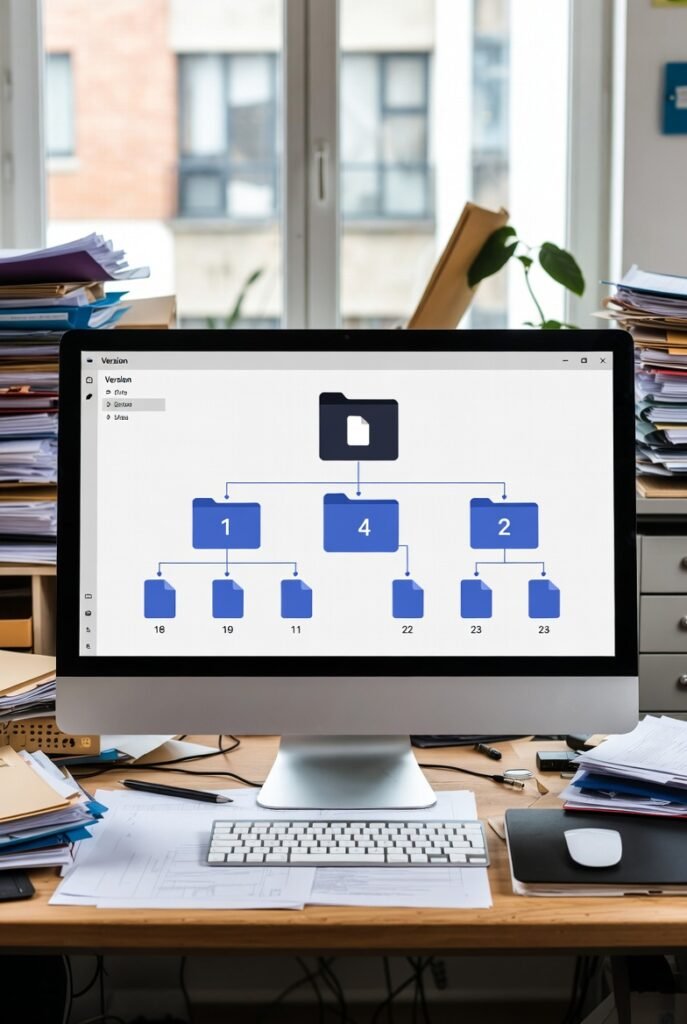
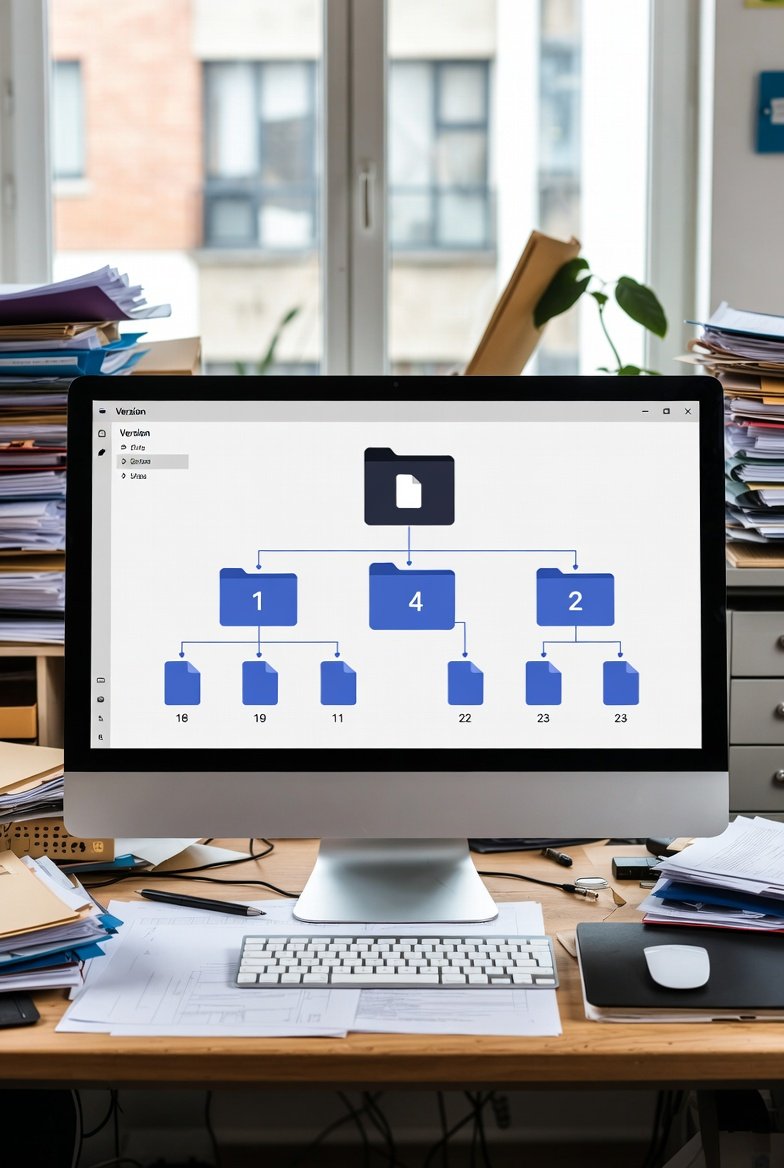
Document Management System Version Control
Most organizations don’t realize they have a version control problem — until the wrong contract is signed, a policy is approved with outdated language, or an auditor asks a simple question:
“Which version was active at the time?”
And nobody can answer with certainty.
Version chaos rarely arrives as a dramatic failure.
It builds quietly:
- A file gets downloaded for “quick edits.”
- Someone revises an older draft.
- Two versions circulate.
- Teams debate which one is final.
- Marketing operations
Multiply that across thousands of operational documents — contracts, brand asset, compliance policies, SOPs — and the risk becomes structural.
Document management system (DMS) version control is the architecture that prevents this collapse.
Not just file history.
Not just tracked changes.
A true version-controlled environment establishes:
✔ ownership
✔ traceability
✔ rollback capability
✔ governance
✔ defensible audit trails
Organizations that implement it properly move faster, pass audits confidently, and eliminate silent operational drag.
Those that don’t eventually pay for it — through rework, legal exposure, or reputational damage.
Operational Definition (Snippet Target)
Document version control is a structured system that tracks document changes, preserves prior versions, records editors, enforces permissions, and enables rollback — ensuring accuracy, accountability, and compliance.
At its core, version control creates something every scaling organization needs:
👉 a single operational truth.
Quick Reality Check — Storage vs True Version Control
Many companies assume cloud storage equals governance.
It doesn’t.
Basic File Storage | Version-Controlled DMS |
Stores files | Governs document lifecycle |
Allows overwrites | Preserves every version |
Limited visibility | Full audit trail |
Manual organization | Automated structure |
Risk-prone | Compliance-ready |
Storage organizes.
Version control protects.
Why Version Control Now Carries Executive-Level Risk
According to enterprise information governance frameworks from AIIM (Association for Intelligent Information Management), organizations must maintain defensible records showing how documents evolve over time — especially in regulated industries.
Failure to do so creates legal vulnerability.
But risk isn’t the only driver.
Modern organizations face:
- distributed teams
- faster approval cycles
- regulatory pressure
- brand consistency demands
- Content governance
- vendor documentation requirements
Version control is no longer an IT feature.
It is operational infrastructure.
How Version Control Actually Works (Technical Architecture)
Most articles stop at definitions.
Operators need architecture.
A mature version control system runs on five structural pillars:
1. Check-In / Check-Out Control
Locks a document during edits to prevent overwrite collisions.
Think of it as traffic control for collaboration.
2. Immutable Version History
Every revision is permanently stored.
Auditors don’t trust overwritten files — they trust traceable timelines.
3. Metadata Intelligence Layer
Tracks:
- editor
- timestamp
- revision notes
- approval status
- classification
Metadata transforms storage into operational intelligence.
4. Permission Architecture
Defines who can:
- view
- edit
- approve
- publish
Version control without permissions is governance theater.
5. Instant Rollback Capability
Mistakes are inevitable.
Rollback is what turns mistakes into minor events instead of organizational crises.
Version Control Workflow (Visual Anchor)
👉 Place diagram here.
Lifecycle:
Draft → Review → Revise → Approve → Publish → Archive
Every stage logged.
Every change traceable.
Every stakeholder visible.
No phantom edits.
No mystery files.
The Hidden Cost of Poor Version Governance
Before going deeper, understand the operational drag weak systems create.
Failure Mode | Business Impact |
Duplicate documents | Decision paralysis |
Outdated versions used | Financial / legal exposure |
No audit trail | Compliance risk |
Email attachments as workflow | Zero governance |
Manual naming (“FINAL_v8”) | Human error |
Shadow copies | Data fragmentation |
Here’s the uncomfortable truth:
Version chaos is not a file problem.
It is an organizational maturity problem.

Examples of Platforms With Strong Version Control
Search engines expect entity completeness in infrastructure topics — and mature buyers evaluate tooling alongside architecture.
Well-known platforms that prioritize version governance include:
- Microsoft SharePoint — deep enterprise permissions + audit history
- M-Files — metadata-driven versioning architecture
- DocuWare — strong compliance workflows
- Dropbox Business — simplified rollback and recovery
- PandaDoc — version tracking for agreements
Notice something important:
Elite systems treat versioning as core infrastructure, not a secondary feature.
When evaluating platforms, avoid tools that “add version history” as an afterthought.
Implementation Framework (Operator Grade)
This is where many organizations stall.
Follow this execution path.
Step 1 — Audit High-Risk Documents
Start with documents tied to:
- revenue
- legal exposure
- compliance
- vendor agreements
- brand governance
Fix where failure is expensive.
Step 2 — Define Ownership
Every critical document needs:
✔ an owner
✔ an approver
✔ a lifecycle
If everyone owns it, nobody does.
Step 3 — Establish Permission Tiers
Typical structure:
- Viewer
- Contributor
- Editor
- Approver
- Administrator
This prevents governance drift as teams scale.
Step 4 — Standardize Metadata
Even automated systems require clarity.
Include:
- department
- document type
- status
- version
- sensitivity level
Good metadata is invisible discipline.
Step 5 — Automate Approval Workflows
Manual approvals create bottlenecks and ambiguity.
Automation creates:
- traceability
- speed
- accountability
And auditors love it.
Step 6 — Train Behavior — Not Just Tools
Technology fails when culture doesn’t shift.
Adoption is leadership work.
Version Control vs Document Control (Critical Distinction)
Many teams blur these concepts.
Version Control | Document Control |
Tracks revisions | Governs lifecycle |
Enables rollback | Enforces policy |
Operational layer | Governance layer |
Protects accuracy | Protects compliance |
You need both.
Version control is the engine.
Document control is the rulebook.
Signals Your Organization Has Outgrown Basic File Storage
Watch for these triggers:
- regulatory oversight
- ISO / SOC preparation
- rapid hiring
- acquisitions
- distributed teams
- complex vendor contracts
At this stage, version control stops being optional.
It becomes infrastructure.
Maturity Model — Where Do You Stand?
Level | Operational State |
Level 1 | Shared drives + manual naming |
Level 2 | Basic cloud history |
Level 3 | Structured versioning |
Level 4 | Automated workflows |
Level 5 | Governance-integrated ecosystem |
Most mid-sized firms hover at Level 2.
Elite operators reach Level 4+ before scaling aggressively.
Integration — The Overlooked Force Multiplier
Version control should connect with:
- CRM platforms
- project management tools
- approval workflow software
- brand asset systems
- compliance platforms
Disconnected tools recreate chaos — just faster.
Potential Drawbacks (Balanced Perspective)
No infrastructure shift is frictionless.
Expect:
- onboarding time
- process redesign
- short-term productivity dips
- cultural resistance
- marketing workflow
But these are temporary costs.
The alternative is long-term operational fragility.
The Executive Risk Most Leaders Underestimate
Many organizations cannot prove which version of a document was active at a specific moment.
During audits or litigation, that gap becomes dangerous.
Version control is not merely operational hygiene.
It is legal defense.
What “Good” Actually Looks Like
In mature environments:
- documents flow through predefined workflows
- approvals log automatically
- teams collaborate without overwrites
- leadership trusts the data
- audits become routine
This is operational clarity.
The Point of No Return
When document volume crosses a certain threshold, manual control collapses.
Organizations that delay structured version governance usually hit a breaking point triggered by:
- compliance management
- rapid scaling
- brand expansion
- regulatory scrutiny
Smart operators build the architecture before pressure arrives.
Final Operator Takeaway
Version control is not about files.
It is about trust in organizational knowledge.
Without it:
- risk rises
- decisions slow
- accountability fades
With it:
- workflows accelerate
- governance strengthens
- leadership gains clarity
If your documents influence revenue, compliance, brand integrity, or customer experience — version control isn’t a technical upgrade.
It is foundational infrastructure.